Flame Vector Illustration: Graphics & Illustrations That Ignite Brand Energy
First Impression: Warm, Dynamic, and Instantly Recognizable
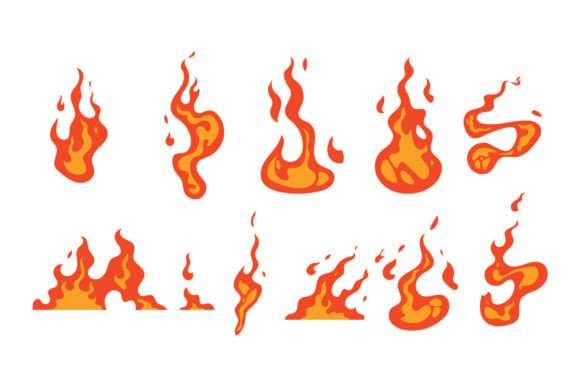
Opening the Flame Vector Illustration pack, I immediately felt its kinetic energy—fluid curves, layered intensity, and a sense of controlled motion. This isn’t just fire as hazard or abstraction; it’s fire as metaphor: passion, transformation, urgency, and vitality. For a small business launching a new coaching program—or a creative entrepreneur unveiling a limited-edition product line—it sets an unmistakable tone. It reads as modern design with artisanal warmth, striking a rare balance between boldness and approachability. It leans into lifestyle content and expressive branding more than sterile corporate identity—but that’s its strength, not a limitation.
Real Campaign Fit: Refreshing a Seasonal Social Media Kit
Last month, I helped a wellness brand refresh their Q4 content kit—think Instagram carousels, Pinterest-ready quote graphics, email banners, and printable gratitude journal inserts. Flame Vector Illustration became the unifying visual motif across formats. We used one flame variant as a subtle background texture behind serif headlines on blog graphics; another scaled large as a hero element in Canva templates for Instagram Stories; and a third, simplified outline version, as a decorative accent on packaging inserts and digital lead magnets. The result? Cohesion without repetition. Each piece felt distinct yet unmistakably part of the same campaign—proof that a well-chosen graphic design asset can unify disparate touchpoints without sacrificing visual hierarchy.
Where Flame Vector Illustration Builds Audience Trust & Recognition
In branding, consistency breeds familiarity—and familiarity builds audience trust. Flame Vector Illustration supports this through versatility: its clean vector construction ensures crisp scaling across platforms (from website headers to sticker sheets), while its three stylistic sets—bold fill, delicate outline, and textured gradient—allow nuanced expression. Used intentionally in logo design accents, product labels, or editorial design, it reinforces brand personality without overwhelming the message. On Facebook ads or digital ads, it draws attention faster than generic stock icons—yet avoids the dated “clipart” feel because of its intentional negative space and balanced weight. For small business branding, that distinction is critical: it signals professional branding, not DIY compromise.
Top 7 Marketing Uses Where It Shines
- Hero graphics for landing pages and campaign launches
- Social media covers and profile accents that convey energy without clutter
- Pinterest pins where visual contrast and emotional resonance boost click-through
- Branded templates for Canva users—especially for coaches and course creators
- Packaging accents on boxes, tags, and tissue paper for handmade or premium goods
- Digital product visuals, like ebook covers or workshop slide decks
- Printable designs such as affirmation cards or seasonal planner stickers
Where to Use Flame Vector Illustration With Intention—Not Assumption
This isn’t a universal drop-in solution. Its expressive nature means it competes with dense information. Avoid using it in text-heavy Facebook ads, low-contrast email banners, or formal B2B proposals where neutrality is expected. It also loses impact when shrunk below 48px—so skip tiny mobile app icons or favicon use. If your brand voice is ultra-minimalist (think monochrome, thin fonts, vast whitespace), Flame Vector Illustration may disrupt your visual rhythm unless carefully edited—e.g., converting to single-color SVG and simplifying stroke weight. And never assume compatibility: always test it against your full brand color palette, especially in black-and-white usage for print or accessibility contexts.
Practical Brand Designer Notes You’ll Actually Use
Before finalizing any campaign asset, I run these checks: Does the flame sit comfortably beside our primary serif font in editorial layouts? How does it pair with our secondary sans serif in social graphics? What happens when placed over a photo background—is the contrast sufficient? I preview every variation on real mobile screens, not just desktop mockups. I place Flame Vector Illustration inside live Canva templates and client website headers to assess spacing and balance. Crucially, I verify the commercial license covers client work, digital ads, and resale items like merch or printable design bundles. Since it includes AI, EPS, SVG, and JPG formats, I default to SVG for web and AI for logo adaptation—but always export PNG backups for platforms that don’t support vector uploads.
Why This Design Bundle Fits Creative Entrepreneurs—Not Just Designers
What makes Flame Vector Illustration stand out in the creative marketplace isn’t just technical quality—it’s strategic flexibility. As a content marketer, I value how easily it integrates into content marketing workflows: swap one flame variant for another to signal a new content pillar, layer it beneath bold headlines to add depth without distraction, or convert it to a duotone for cohesive brand filters. For online coaches building media kits or bloggers designing lead magnets, it delivers professional-grade visual polish without requiring advanced Illustrator skills. And because it’s delivered as a design bundle—not isolated clipart—it encourages thoughtful, repeatable application rather than one-off decoration. That’s how graphic design assets stop being “nice to have” and start becoming core brand infrastructure.
A Final Note on Emotional Connection & Visual Clarity
In a feed saturated with sameness, Flame Vector Illustration helps your message land with warmth and intention. It doesn’t shout—it pulses. It doesn’t distract—it directs. When aligned with authentic brand voice and smart layout, it elevates marketing visuals from functional to memorable. Whether you’re a solopreneur shipping your first product or a digital seller refreshing a best-selling Canva template, this graphic design asset earns its place—not as filler, but as fuel.